 beeluciaco
What Actually Happens to Indoor Air Quality When Burning Paraffin vs. Beeswax Candles?
Candles are supposed to make a home feel cleaner, calmer, and more comfortable.
But not all candles are created equally.
Over the last decade, consumers have become far more aware of the ingredients in their food, skincare, and cleaning products — yet many people still don’t realize they may be burning petroleum-based wax and synthetic fragrance chemicals directly inside their homes for hours at a time.
At Bee Lucia Wellness Candles, we created our candles specifically for people looking for a cleaner, non-toxic alternative to conventional scented candles. Many of our customers originally discovered us because they suffer from migraines, fragrance sensitivities, allergies, nausea, or reactions to synthetic fragrances.
That raises an important question: what actually happens to indoor air quality when you burn paraffin candles compared to beeswax and coconut oil candles?
What Most Conventional Candles Are Made Of
Many mainstream candles are made primarily from paraffin wax. These are about as far away from non toxic candles you can get.
Paraffin is a petroleum-derived wax created during the oil refinement process. It became popular because it’s inexpensive, widely available, and holds fragrance extremely well.
Most conventional candles also contain:
- Synthetic fragrance blends
- Artificial dyes
- Chemical fragrance stabilizers
- Petroleum-derived ingredients
- Highly processed wax systems
The word “fragrance” on a label can also legally represent dozens or even hundreds of undisclosed chemical compounds.
That doesn’t automatically make every candle dangerous. But it does mean consumers often have very little transparency into what they’re actually burning indoors.
Why Indoor Air Quality Matters
Anything burned indoors releases particles and compounds into the air.
This includes:
- Soot
- Volatile Organic Compounds (VOCs)
- Combustion byproducts
- Fragrance compounds
Studies have examined how certain candles and wax melts may contribute to indoor air pollution, particularly in poorly ventilated spaces.
Some paraffin candles have been associated with the release of compounds like:
- Benzene
- Toluene
- Formaldehyde
- Soot particulates
The biggest variable is usually not just the wax itself, but the total formulation:
- Fragrance oils
- Wick quality
- Dye systems
- Additives
- Burn conditions
That’s one reason quality matters so much.
Why We Chose Beeswax and Organic Coconut Oil
Bee Lucia was built around a very different philosophy.
We believe candles should contribute to a healing home environment — not take away from it.
That’s why our Wellness Candle® line uses:
- Food-grade beeswax
- Organic coconut oil
- Pure therapeutic essential oils
- Cotton wicks
- No synthetic fragrances
- No dyes
- No paraffin
- No phthalates
Our essential oils are sourced from Liberty Naturals in Oregon City, Oregon, a long-established Oregon supplier known for high-quality therapeutic essential oils.
Every candle is hand-poured in small batches in Portland, Oregon by three generations of women using intentionally simple ingredients.

Why Some People React Poorly to Conventional Candles
One thing we consistently hear from customers is that many conventional scented candles give them:
- Headaches
- Migraines
- Nausea
- Allergy-like symptoms
- Sensory overload
- Respiratory irritation
Synthetic fragrance sensitivity is real for many people, even when reactions vary from person to person.
That’s one reason we intentionally avoid synthetic fragrance systems entirely.
“LOVE these candles!! They smell so good and don’t give me a headache like other scented candles. I love how they clean the air as well.”
“THANK YOU for making an actual safe candle with no toxic chemicals AND is unscented, which is so hard to find.”
Others specifically mention appreciating the clean-burning nature of the candles and feeling more comfortable burning them around family members and pets.
What About Soy Candles?
Soy candles are often marketed as a healthier alternative to paraffin, as non toxic candles. And in some cases, they may be.
But not all soy candles are equal either.
Many consumers don’t realize that some soy wax blends may still contain:
- Paraffin additives
- Synthetic fragrance oils
- Dyes
- Chemical stabilizers
- Highly processed oils
Additionally, many soy candles still rely heavily on artificial fragrance systems for scent throw.
At Bee Lucia, we chose beeswax and coconut oil specifically because we wanted an intentionally minimal, cleaner-burning formula centered around natural ingredients.
How to Tell If a Candle Is Truly “Clean”
Marketing terms can be vague, so here are some practical questions consumers should ask.
What is the wax actually made from?
Look for transparency around ingredients.
Does the candle use synthetic fragrance oils?
Many brands simply list “fragrance,” which can hide complex chemical blends.
Is the wick metal-free?
Some imported candles may still use questionable wick materials. Bee Lucia uses cotton wicks.
Is the candle heavily dyed?
Artificial dyes add unnecessary ingredients to the burn system.
Is the company transparent about sourcing and production?
Many candle brands are white-labeled products manufactured in bulk overseas.
The Bee Lucia Difference: True Non Toxic Candles
We created Bee Lucia for people who care deeply about what enters their home environment.
Our customers are often:
- Wellness-conscious
- Sensitive to synthetic fragrance
- Looking for non-toxic home products
- Seeking calmer, cleaner spaces
- Interested in intentional living
Many also simply notice that our candles burn differently.
Customers frequently describe them as:
- Cleaner burning
- Softer smelling
- Less overwhelming
- Longer lasting
- More natural
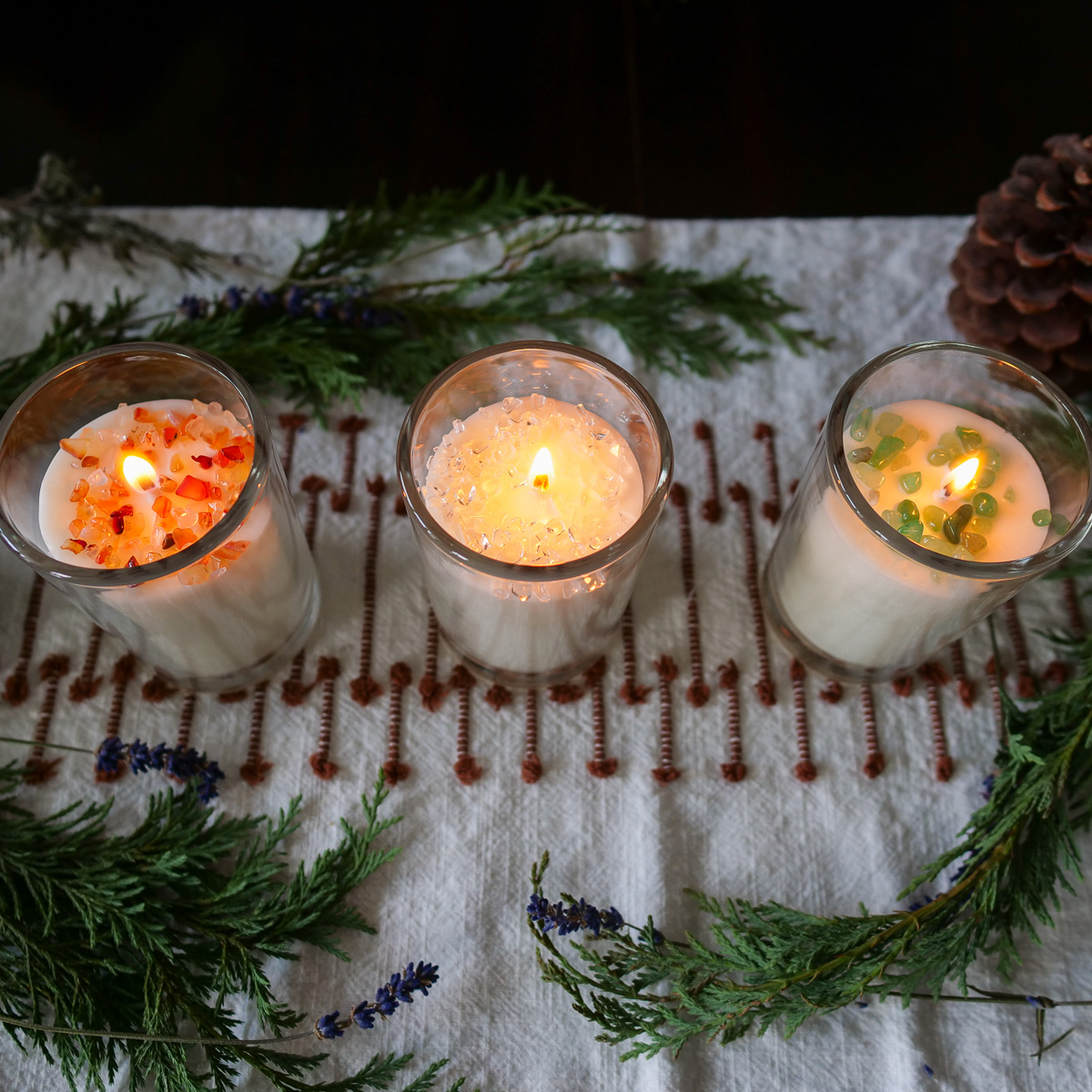
“These candles smell amazing and burn very clean. The crystals are a wonderful addition. They are long-lasting – 40 hours.”
“The candles are top notch as usual – Bee Lucia’s clean burning candles are magic!”
We also intentionally formulate for long burn times so customers can enjoy their candles for extended periods without the fast burnout common with many mass-produced candles.
Final Thoughts: Not All Candles Are the Same
The candle industry often treats all candles as interchangeable.
They are not.
Wax source matters. Fragrance ingredients matter. Wick quality matters. Manufacturing standards matter.
A cheap paraffin candle with synthetic fragrance oils is fundamentally different from a small-batch candle made with beeswax, coconut oil, and therapeutic essential oils.
At Bee Lucia, we believe candles should support a healthier home environment — while still smelling beautiful, burning cleanly, and lasting a long time.
Because a candle should bring comfort into your home, not compromise the air you breathe.